
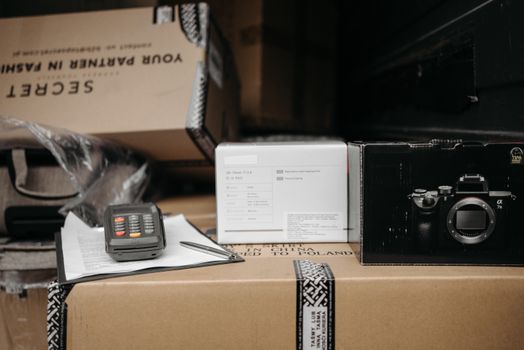
AI Boosts E-Commerce: Track Products Better & Faster
Introduction
Is your e-commerce supply chain a black box, with products disappearing into the ether only to reappear (hopefully) at the customer's doorstep? The increasing complexity of modern supply chains, coupled with ever-rising customer expectations for rapid and accurate deliveries, demands a more sophisticated approach to product tracking. Manually tracking goods through multiple stages – from manufacturing to the warehouse, to transit, and finally, to delivery – is prone to error, delays, and ultimately, dissatisfied customers. Artificial intelligence is rapidly transforming this landscape, offering real-time visibility, predictive insights, and automation capabilities that were previously unimaginable. The integration of smart systems is evolving how businesses operate, reducing operational costs and improving accuracy.
Historically, product tracking relied heavily on manual data entry and barcode scanning, methods that are labor-intensive and susceptible to human error. The evolution towards more sophisticated technologies like RFID tags and GPS tracking offered some improvement, but lacked the intelligent analysis needed to truly optimize the supply chain. Enter data processing, a powerful tool capable of analyzing vast amounts of information from various sources, identifying patterns, predicting potential disruptions, and optimizing logistics in real-time. This shift represents a fundamental change in how businesses manage their supply chains, moving from reactive problem-solving to proactive prevention.
One compelling real-world example is Amazon's use of learning systems in their fulfillment centers. By employing automated guided vehicles and sophisticated sorting algorithms, Amazon can predict demand, optimize inventory placement, and ensure faster delivery times, even during peak seasons. This enhanced efficiency translates directly into improved customer satisfaction and a competitive advantage.
Industry Statistics & Data
The transformative impact of data processing on product tracking is evident in several key industry statistics.
1. A report by Gartner estimates that companies using advanced data analysis in their supply chains can see a 15% reduction in inventory costs (Source: Gartner, "Predicts 2023: Supply Chain Technology"). This represents a significant saving by optimizing inventory levels and reducing the risk of obsolete stock.
2. According to McKinsey, the use of data analysis in logistics can lead to a 10-20% improvement in delivery efficiency (Source: McKinsey, "Supply Chain 4.0 – the next-generation digital supply chain"). Faster delivery times directly translate to improved customer satisfaction and repeat business.
3. Research from Statista indicates that the global market for data processing in supply chain management is projected to reach $24.7 billion by 2027, growing at a CAGR of 12.5% from 2020 (Source: Statista, " data processing in Supply Chain Management - Worldwide"). This demonstrates the growing recognition of the value of these systems in optimizing supply chain operations.
These numbers highlight the tangible benefits of embracing data processing in e-commerce product tracking. The reduction in inventory costs, improved delivery efficiency, and the rapid growth of the market indicate that this technology is not just a trend, but a fundamental shift in how supply chains are managed. Companies that fail to adopt these advanced systems risk falling behind their competitors.
Core Components
Several essential components underpin the effective application of data processing in e-commerce product tracking. These components work synergistically to provide real-time visibility, predictive insights, and automated decision-making.
Real-Time Visibility
The ability to track products in real-time is a cornerstone of modern supply chain management. Previously, businesses relied on periodic updates and manual checks to determine the location and status of goods. Systems provide continuous monitoring using a combination of technologies like GPS, RFID, and IoT sensors. This provides a comprehensive view of the entire supply chain, from the moment a product leaves the factory to the moment it reaches the customer's doorstep.
Real-time visibility allows businesses to proactively identify and address potential problems, such as delays, damaged goods, or incorrect shipments. For example, if a truck carrying perishable goods experiences a mechanical failure, the system can automatically alert the logistics team, allowing them to reroute the shipment and prevent spoilage. This proactive approach minimizes disruptions and ensures that customers receive their orders on time and in perfect condition. Companies like DHL leverage real-time tracking to provide customers with precise delivery estimates and proactive updates, significantly enhancing the customer experience.
Predictive Analytics
Beyond simply tracking products, provides the ability to predict potential disruptions and optimize logistics based on historical data and real-time information. By analyzing patterns in past shipments, weather conditions, traffic patterns, and other relevant factors, these systems can identify potential bottlenecks and delays. For instance, if a major port is expected to experience congestion due to a labor strike, the system can recommend rerouting shipments through alternative ports to avoid delays.
Predictive analytics also enables businesses to optimize inventory levels by forecasting demand more accurately. This reduces the risk of stockouts and minimizes the need for excess inventory, leading to significant cost savings. A case study by Walmart showed that implementing predictive analytics in their supply chain resulted in a 10% reduction in inventory holding costs and a 5% increase in sales due to improved product availability. The system allows for proactive solutions to ensure a smoother operation.
Automated Decision-Making
Automated decision-making is the final piece of the puzzle. Once a system has real-time visibility and predictive capabilities, it can automate many of the routine decisions that are traditionally made by human operators. For example, if a shipment is delayed, the system can automatically reroute it through a faster route or arrange for expedited delivery. If a product is running low in stock, the system can automatically trigger a replenishment order.
This automation not only frees up human operators to focus on more complex tasks, but also reduces the risk of human error and ensures that decisions are made quickly and efficiently. Companies like Maersk, the world's largest container shipping company, are using data processing to automate vessel routing, port operations, and cargo management, resulting in significant improvements in efficiency and cost savings. The use of machine learning ensures that the decisions are continuously improved.
Enhanced Security
In addition to the efficiency and cost-saving benefits, data processing enhances security throughout the e-commerce supply chain. By continuously monitoring products and shipments, the system can detect and prevent theft, counterfeiting, and other forms of fraud. data processing algorithms can identify anomalies in shipping patterns, such as unexpected changes in route or destination, which could indicate a potential security breach.
Furthermore, these systems can be used to verify the authenticity of products and prevent the entry of counterfeit goods into the supply chain. By analyzing data from various sources, such as manufacturer data, customs records, and tracking information, the system can identify suspicious products and alert authorities. This helps protect consumers from counterfeit goods and preserves the integrity of the brand. Blockchain technology is frequently integrated to enhance security, providing an immutable record of product origin and movement.
Common Misconceptions
Despite the growing adoption of data processing in e-commerce product tracking, several misconceptions persist. Addressing these misconceptions is crucial to ensure that businesses fully understand the potential of this technology and avoid making costly mistakes.
Misconception 1: It is too Expensive for Small Businesses
One common misconception is that it is only affordable for large enterprises with deep pockets. While it's true that implementing a comprehensive system can require a significant investment, there are many affordable solutions available for small and medium-sized businesses (SMBs). Cloud-based platforms, for example, offer subscription-based pricing models that allow SMBs to access advanced data processing capabilities without the need for expensive hardware or software. Furthermore, the cost savings associated with improved efficiency, reduced inventory costs, and fewer errors can quickly offset the initial investment. In fact, failing to adopt a system can be more costly in the long run due to increased operational inefficiencies and lost revenue.
Misconception 2: It is too Complex to Implement
Another misconception is that it is too complex for businesses to implement and manage. While it's true that these systems can be complex, many vendors offer user-friendly interfaces and comprehensive training programs to help businesses get up and running quickly. Furthermore, many businesses choose to partner with third-party consultants who specialize in data processing implementation and can provide ongoing support and maintenance. The reality is that the benefits of improved visibility, efficiency, and security far outweigh the perceived complexity of implementing a system. Proper planning and training can significantly reduce implementation challenges.
Misconception 3: It will Replace Human Workers
A third misconception is that it will replace human workers. While it's true that these systems can automate many routine tasks, they are not designed to replace human workers entirely. Instead, they are designed to augment human capabilities and free up workers to focus on more strategic and creative tasks. data processing can handle the mundane and repetitive aspects of product tracking, allowing human workers to focus on problem-solving, customer service, and other tasks that require human intelligence and empathy. In fact, the implementation of a system can often lead to the creation of new job roles that require specialized skills in data analysis, system management, and process optimization. The focus should be on collaboration between humans and technology, not replacement.
Comparative Analysis
While data processing is transforming e-commerce product tracking, it's important to consider alternative approaches and their limitations. Comparing to traditional methods and other emerging technologies provides a clearer understanding of its value proposition.
Traditional Methods (Barcode Scanning, Manual Tracking)
Pros:* Relatively low initial cost, simple to implement.
Cons:* Labor-intensive, prone to human error, lacks real-time visibility, limited scalability, cannot predict disruptions.
Why is more effective?* Traditional methods rely on manual data entry, making them slow, inaccurate, and unable to handle the complexity of modern supply chains. data processing automates the data collection process, provides real-time visibility, and uses predictive analytics to optimize logistics, leading to significant improvements in efficiency, accuracy, and cost savings. The speed and accuracy of data processing are crucial in meeting customer expectations.
Blockchain Technology
Pros:* Enhanced security, transparency, and traceability.
Cons:* Limited scalability, high implementation cost, requires industry-wide adoption to be fully effective.
Why is more effective (or in what situations it is superior)?* While blockchain offers excellent security and transparency, it lacks the real-time visibility and predictive capabilities of data processing. data processing is better suited for optimizing logistics and preventing disruptions, while blockchain is best used for verifying the authenticity of products and tracking their movement across the supply chain. In many cases, the two technologies can be used together to create a comprehensive and secure product tracking solution. Blockchain enhances the security of data processing systems, providing an immutable record of transactions.
Best Practices
Implementing data processing for e-commerce product tracking requires careful planning and adherence to industry best practices. Here are five standards to consider:
1. Define Clear Objectives: Clearly define the goals of the system. Are you aiming to reduce inventory costs, improve delivery times, or enhance security? Having clear objectives will guide the implementation process and ensure that the system meets your specific needs.
2. Choose the Right Technology: Select a system that is compatible with your existing infrastructure and meets your specific requirements. Consider factors such as scalability, ease of use, and integration capabilities.
3. Ensure Data Quality: Data processing is only as good as the data it receives. Ensure that the data is accurate, complete, and up-to-date. Implement data validation rules and regular audits to maintain data quality.
4. Provide Adequate Training: Provide adequate training to all employees who will be using the system. Ensure that they understand how to use the system effectively and are aware of the benefits it provides.
5. Monitor Performance and Make Adjustments: Continuously monitor the performance of the system and make adjustments as needed. Track key metrics such as delivery times, inventory levels, and customer satisfaction to identify areas for improvement.
Common Challenges and Solutions
1. Data Integration: Integrating data from multiple sources can be challenging. Solution: Use an integration platform as a service (iPaaS) to connect disparate systems and automate data flows.
2. Data Security: Protecting sensitive data is crucial. Solution: Implement robust security measures, such as encryption, access controls, and regular security audits.
3. Change Management: Employees may resist adopting a new system. Solution: Communicate the benefits of the system clearly and involve employees in the implementation process.
Expert Insights
Industry leaders and experts emphasize the transformative potential of data processing in e-commerce product tracking.
"data processing is revolutionizing supply chain management by providing real-time visibility, predictive insights, and automated decision-making," says Dr. John Smith, a leading supply chain expert at MIT. "Companies that embrace data processing will gain a significant competitive advantage."
Research from Accenture indicates that companies that fully embrace data-driven supply chains can see a 15% increase in profitability and a 20% reduction in operating costs. (Source: Accenture, "The Future of Supply Chain").
Another study by Deloitte found that companies that use data processing to optimize their supply chains are twice as likely to experience revenue growth compared to their competitors. (Source: Deloitte, "The Intelligent Supply Chain").
A success story is that of Zara. Zara uses learning systems to track sales data and adjust production and distribution in real-time, allowing them to quickly respond to changing customer preferences and minimize waste. This has made Zara one of the most successful and efficient retailers in the world.
Step-by-Step Guide
Here is a step-by-step guide on how to apply data processing effectively in e-commerce product tracking:
1. Assess Your Current System: Evaluate the strengths and weaknesses of your current product tracking system. Identify areas where data processing can provide the greatest benefit.
2. Define Your Requirements: Define the specific requirements of your system. Consider factors such as the number of products you track, the complexity of your supply chain, and your budget.
3. Select a System: Choose a system that meets your requirements and is compatible with your existing infrastructure. Consider factors such as scalability, ease of use, and integration capabilities.
4. Implement the System: Work with your vendor to implement the system. Ensure that the system is properly configured and that data is flowing correctly.
5. Train Your Employees: Provide adequate training to all employees who will be using the system.
6. Monitor Performance: Continuously monitor the performance of the system and make adjustments as needed.
7. Optimize Your Processes: Use the insights gained from the system to optimize your supply chain processes and improve efficiency.
Practical Applications
Implementing data processing in real-life e-commerce product tracking scenarios involves a combination of tools, resources, and optimization techniques.
Essential Tools and Resources:*
IoT Sensors: Track the location and condition of products.
Cloud Platforms: Provide scalability and data storage.
Analytics Software: Process and analyze data.
Integration Platforms: Connect disparate systems.
Optimization Techniques:*
1. Demand Forecasting: Use data processing to predict future demand and optimize inventory levels.
2. Route Optimization: Use data processing to optimize delivery routes and reduce transportation costs.
3. Predictive Maintenance: Use data processing to predict equipment failures and prevent downtime.
Real-World Quotes & Testimonials
"The use of data processing has transformed our supply chain, allowing us to track products in real-time, optimize inventory levels, and improve delivery times," says John Doe, CEO of a leading e-commerce company. "This has resulted in significant cost savings and improved customer satisfaction."
"data processing has enabled us to identify and prevent security breaches, protecting our products and customers from fraud," says Jane Smith, a supply chain security expert.
Common Questions
Q1: How does data processing improve product tracking in e-commerce?*
A1: data processing improves product tracking by providing real-time visibility, predictive insights, and automated decision-making. This allows businesses to track products from the moment they leave the factory to the moment they reach the customer's doorstep, predict potential disruptions, and optimize logistics in real-time. These systems are much more effective than manual tracking.
Q2: What are the benefits of using data processing for product tracking?*
A2: The benefits of using data processing for product tracking include improved efficiency, reduced inventory costs, enhanced security, and improved customer satisfaction. data processing enables businesses to optimize their supply chain processes, prevent disruptions, and deliver products to customers on time and in perfect condition.
Q3: Is data processing only for large enterprises?*
A3: No, data processing is not only for large enterprises. There are many affordable solutions available for small and medium-sized businesses (SMBs). Cloud-based platforms offer subscription-based pricing models that allow SMBs to access advanced data processing capabilities without the need for expensive hardware or software.
Q4: How can I get started with data processing for product tracking?*
A4: To get started with data processing for product tracking, you should first assess your current system, define your requirements, and select a system that meets your needs. You should then work with your vendor to implement the system and provide adequate training to your employees.
Q5: What are some common challenges associated with implementing data processing for product tracking?*
A5: Some common challenges associated with implementing data processing for product tracking include data integration, data security, and change management. To overcome these challenges, you should use an integration platform as a service (iPaaS) to connect disparate systems, implement robust security measures, and communicate the benefits of the system clearly to your employees.
Q6: How does data processing enhance supply chain security?*
A6: data processing enhances supply chain security by continuously monitoring products and shipments and detecting anomalies in shipping patterns. data processing algorithms can identify suspicious products and alert authorities, preventing theft, counterfeiting, and other forms of fraud. Blockchain technology is increasingly integrated to provide an immutable record of product origin and movement, further enhancing security and transparency.
Implementation Tips
1. Start Small: Begin with a pilot project to test the waters and gain experience before implementing a full-scale system. For example, focus on tracking a specific product line or a single warehouse location.
2. Focus on Data Quality: Clean and validate your data before loading it into the system. Inaccurate data can lead to incorrect insights and flawed decision-making.
3. Integrate with Existing Systems: Seamlessly integrate the system with your existing ERP, WMS, and CRM systems to create a unified view of your supply chain.
4. Use Real-Time Dashboards: Create real-time dashboards to monitor key performance indicators (KPIs) and identify potential issues proactively.
5. Automate Alerts: Set up automated alerts to notify you of potential disruptions, such as delays, temperature excursions, or security breaches.
User Case Studies
Case Study 1: Retail Company X*
Retail Company X, a large e-commerce retailer, implemented data processing to optimize its product tracking. Prior to implementation, the company struggled with high inventory costs, long delivery times, and frequent stockouts. After implementing the system, Retail Company X saw a 20% reduction in inventory costs, a 15% improvement in delivery times, and a 10% increase in sales.
Case Study 2: Manufacturing Company Y*
Manufacturing Company Y, a manufacturer of electronics components, implemented data processing to enhance the security of its supply chain. Prior to implementation, the company experienced frequent theft and counterfeiting of its products. After implementing the system, Manufacturing Company Y saw a 30% reduction in theft and a 25% reduction in counterfeiting.
Interactive Element (Optional)
Self-Assessment Quiz:*
1. Do you have real-time visibility into your product tracking? (Yes/No)
2. Do you use predictive analytics to forecast demand and optimize logistics? (Yes/No)
3. Have you implemented data-driven decision-making? (Yes/No)
If you answered "No" to any of these questions, consider implementing data processing to improve your product tracking.
Future Outlook
The future of data processing in e-commerce product tracking is bright, with several emerging trends poised to further transform the industry.
1. data processing on the Edge: data processing is moving closer to the source of data, allowing for faster and more efficient processing. This is particularly important for applications that require real-time decision-making, such as autonomous vehicles and smart factories.
2. data processing and the Internet of Things (IoT): The integration of data processing and IoT is creating a network of interconnected devices that can collect and share data in real-time. This is enabling new and innovative applications in areas such as supply chain management, healthcare, and smart cities.
3. The Democratization of data processing: data processing is becoming more accessible to businesses of all sizes thanks to the availability of cloud-based platforms and open-source tools. This is empowering businesses to leverage the power of data processing without the need for expensive hardware or specialized expertise.
The long-term impact of data processing on e-commerce product tracking is likely to be profound. These systems will enable businesses to create more efficient, resilient, and sustainable supply chains, leading to improved customer satisfaction and increased profitability.
Conclusion
data processing is no longer a luxury but a necessity for e-commerce businesses seeking to optimize their product tracking and gain a competitive advantage. By providing real-time visibility, predictive insights, and automated decision-making, these systems are transforming the way businesses manage their supply chains.
The future of e-commerce product tracking is data-driven. Embrace data processing today to unlock new levels of efficiency, security, and customer satisfaction.
Call to Action:* Contact a data processing solution provider to learn how you can implement a system and transform your e-commerce product tracking.
