
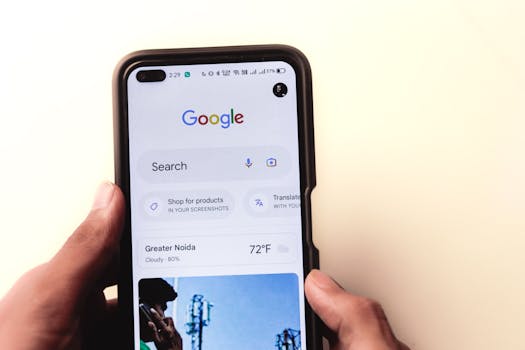
Smart Home SEO: How Devices Reshape Search Trends
Introduction
Are smart home devices changing the way people search for information? The answer is a resounding yes, and understanding how these devices are shaping SEO trends is crucial for businesses seeking to maintain or improve their online visibility. The rise of voice search, fueled by smart speakers and other connected devices, necessitates a shift in SEO strategies. It's no longer enough to optimize for traditional text-based queries; businesses must adapt to the conversational, natural language used by individuals interacting with their smart home technology. From intelligent thermostats to voice-controlled lighting systems, the proliferation of these devices is creating a new landscape for search engine optimization.
The evolution of SEO has always been driven by changes in user behavior. In the early days of the internet, keyword stuffing was a common practice. As search engine algorithms became more sophisticated, SEO evolved to focus on content quality and link building. Now, with the widespread adoption of smart home technology, the focus is shifting again, this time towards voice search and local SEO optimization. This latest shift in the SEO landscape demands that businesses focus more on creating relevant content that directly answers the user’s intent, optimize for long-tail keywords, and ensure that business listings are accurate and up-to-date.
One real-world example of this shift is in the restaurant industry. Instead of typing "Italian restaurants near me" into a search engine, a user might simply ask their smart speaker, "Hey Google, what Italian restaurants are open right now?" Restaurants that have optimized their online presence for voice search, including accurate business listings and menus, are more likely to be recommended by the smart speaker. This can translate to increased foot traffic and revenue.
Industry Statistics & Data
The numbers paint a clear picture of the growing influence of smart home devices on search behavior. Consider these statistics:
1. Statista projects that the global smart home market will reach $407.44 billion in 2024. This massive market size indicates a significant user base that increasingly relies on smart home devices for information and services.
(Source: Statista)
2. According to a study by Perficient, approximately 58% of consumers use voice search to find local business information. This highlights the critical role voice search plays in local SEO, especially for businesses catering to local customers.
(Source: Perficient)
3. Comscore estimates that over 50% of all searches will be voice searches by 2024. This demonstrates a significant shift in how people access information, requiring a corresponding change in SEO strategies.
(Source: Comscore)
These numbers collectively indicate a substantial shift in the digital landscape. Businesses that fail to adapt to the growing influence of smart home devices and voice search risk losing significant visibility and potential customers. The rise of the smart home is not just a technological trend; it's a fundamental change in how people interact with the internet and access information. Therefore, smart home SEO becomes pivotal to long-term marketing success.
Core Components
Several core components are key to understanding how smart home devices are reshaping SEO trends: voice search optimization, local SEO for smart home devices, natural language processing (NLP) and schema markup, and mobile-first indexing adaptation.
Voice Search Optimization
Voice search optimization differs fundamentally from traditional text-based search. When people type a query, they often use abbreviated language. However, when speaking to a smart device, they tend to use full sentences and conversational language. This means that keywords need to be longer, more natural, and focused on answering specific questions. Understanding the user's intent behind a voice query is paramount.
Businesses can optimize for voice search by creating content that directly answers common questions related to their products or services. A Frequently Asked Questions (FAQ) page is particularly effective. It is vital to use natural language and avoid overly technical jargon. Voice search prioritizes short, concise answers, and structured data helps search engines understand the content better.
A practical application of voice search optimization can be seen in the healthcare industry. Patients might ask their smart speaker, "What are the symptoms of a cold?" Hospitals and clinics can create content that answers this question in a clear, easy-to-understand manner, increasing their visibility in voice search results and driving traffic to their website.
Local SEO for Smart Home Devices
Smart home devices are often used to find local information, such as nearby restaurants, stores, and services. Optimizing for local SEO is crucial for businesses that want to be found by users searching through smart speakers. This involves ensuring that business listings are accurate and up-to-date on platforms like Google My Business, Yelp, and Bing Places.
These listings should include essential information, such as the business name, address, phone number, hours of operation, and a description of the products or services offered. It is also crucial to encourage customers to leave reviews, as positive reviews can improve a business's ranking in local search results. Furthermore, businesses should ensure their websites are mobile-friendly, as many users will likely access their website via their smartphone after finding them through a smart home device.
Consider a local bakery. If someone asks their smart speaker, "Where can I buy fresh bread nearby?", the bakery with an optimized Google My Business listing, complete with accurate information and positive reviews, will be more likely to be recommended. This direct connection with local consumers is a powerful tool for driving sales.
Natural Language Processing (NLP) and Schema Markup
Natural Language Processing (NLP) is a branch of artificial intelligence that enables computers to understand and process human language. Search engines use NLP to interpret the meaning behind search queries, including voice searches. Optimizing for NLP involves creating content that is written in a natural, conversational style.
Schema markup is a form of structured data that helps search engines understand the content on a website. By adding schema markup to your website, you can provide search engines with more context about your business, products, and services. This can improve your website's ranking in search results and increase the likelihood that it will be featured in rich snippets.
For example, a recipe website can use schema markup to provide search engines with information about the ingredients, cooking time, and nutritional information for a recipe. When someone searches for "chocolate chip cookie recipe," the website with the appropriate schema markup is more likely to be featured in a rich snippet, making it more visible in search results.
Mobile-First Indexing Adaptation
Mobile-first indexing means that search engines primarily use the mobile version of a website for indexing and ranking. This shift reflects the growing use of smartphones and other mobile devices to access the internet. Businesses must ensure that their websites are mobile-friendly and that the mobile version of their website contains the same content and functionality as the desktop version.
This means that the website should be responsive, meaning that it adapts to different screen sizes. It should also load quickly and be easy to navigate on a mobile device. Neglecting the mobile experience can significantly harm a website's ranking in search results, as search engines prioritize websites that provide a good user experience on mobile devices.
A simple example of this is a retail website. If the mobile version of the website is slow to load or difficult to navigate, users are likely to abandon the site and go to a competitor. By ensuring that the website is mobile-friendly, the retailer can improve the user experience and increase the likelihood that users will make a purchase.
Common Misconceptions
Several misconceptions surround the influence of smart home devices on SEO. Debunking these misconceptions is essential for developing a clear and effective SEO strategy.
One common misconception is that optimizing for voice search is simply about adding "voice keywords" to existing content. While including relevant keywords is important, voice search optimization requires a more nuanced approach. It involves understanding the intent behind voice queries and creating content that answers specific questions in a conversational manner. Simply adding keywords without addressing the user's underlying needs is unlikely to be effective.
Another misconception is that local SEO is only relevant for businesses with a physical location. While local SEO is crucial for brick-and-mortar stores, it is also important for businesses that provide services in a specific geographic area. Even if a business does not have a physical storefront, it can still optimize its online presence to be found by local customers searching through smart home devices.
A third misconception is that schema markup is only for large businesses with complex websites. Schema markup can be beneficial for businesses of all sizes, from small local shops to large corporations. Adding schema markup to a website is relatively simple and can significantly improve its visibility in search results, regardless of the business's size or complexity.
Comparative Analysis
Traditional SEO primarily focuses on optimizing websites for text-based search queries on desktop and mobile devices. Smart home SEO, on the other hand, is specifically tailored to voice search and the unique characteristics of smart home devices. While both approaches share some common elements, such as keyword research and content optimization, they also differ significantly.
Traditional SEO emphasizes keyword targeting, link building, and technical SEO. Smart home SEO focuses on voice search optimization, local SEO, natural language processing, and mobile-first indexing. Traditional SEO often involves targeting a broad range of keywords, while smart home SEO focuses on long-tail keywords and specific questions.
The pros of traditional SEO include its established methodologies and a wide range of tools and resources. The cons include its increasing complexity and the growing competition for top search rankings. The pros of smart home SEO include its potential to reach a highly engaged audience and its ability to drive local traffic. The cons include the evolving nature of voice search technology and the need for specialized expertise.
Smart home SEO is more effective for businesses that want to reach local customers through voice search. It is also more effective for businesses that provide services or products that are frequently searched for using smart home devices. Traditional SEO is more effective for businesses that want to reach a broad audience through text-based search.
Best Practices
To effectively navigate the smart home SEO landscape, businesses should adhere to these best practices:
1. Conduct Keyword Research for Voice Search: Identify the long-tail keywords and questions that people are using when searching for products or services through smart home devices. Use tools like AnswerThePublic and Google Keyword Planner to find relevant keywords.
2. Optimize Google My Business Profile: Ensure that your Google My Business listing is accurate, complete, and up-to-date. Include essential information, such as your business name, address, phone number, hours of operation, and a description of your products or services.
3. Create Conversational Content: Develop content that is written in a natural, conversational style. Answer common questions related to your products or services in a clear and easy-to-understand manner.
4. Implement Schema Markup: Add schema markup to your website to provide search engines with more context about your business, products, and services. Use Google's Structured Data Markup Helper to create schema markup code.
5. Monitor Voice Search Analytics: Track the performance of your voice search optimization efforts. Use Google Analytics to monitor voice search traffic and identify areas for improvement.
Three common challenges in smart home SEO include accurately identifying voice search queries, adapting to the evolving nature of voice search technology, and measuring the ROI of voice search optimization efforts. To overcome these challenges, businesses should invest in keyword research, stay up-to-date on the latest voice search trends, and use analytics to track the performance of their voice search strategies.
Expert Insights
According to Neil Patel, a renowned digital marketing expert, "Voice search is the future of search, and businesses that don't adapt will be left behind." He emphasizes the importance of optimizing for long-tail keywords and creating content that answers specific questions.
A study by Backlinko found that voice search results tend to be shorter and more concise than traditional search results. This highlights the importance of creating content that is easy to understand and provides quick answers to common questions.
A successful case study involves a local restaurant that optimized its Google My Business listing and created conversational content answering common questions about its menu and hours of operation. As a result, the restaurant saw a significant increase in voice search traffic and a corresponding increase in foot traffic.
Step-by-Step Guide
Here's a step-by-step guide on how to apply smart home SEO effectively:
1. Identify Target Audience: Determine the demographics and search behaviors of your target audience.
2. Conduct Voice Keyword Research: Use tools like AnswerThePublic to identify common voice search queries related to your business.
3. Optimize Google My Business Profile: Ensure that your Google My Business listing is complete and accurate.
4. Create Conversational Content: Develop content that answers common questions in a natural, conversational style.
5. Implement Schema Markup: Add schema markup to your website to provide search engines with more context.
6. Test on Smart Home Devices: Test your content on different smart home devices to ensure that it is easily accessible and understandable.
7. Monitor and Analyze: Track your voice search traffic and adjust your strategy as needed.
Practical Applications
Consider a local flower shop. To implement smart home SEO, the shop owner could:
1. Optimize Google My Business: Ensure that the listing includes business hours, contact details, and a description of services (e.g., flower delivery, custom arrangements).
2. Create Voice-Friendly Content: Develop blog posts answering questions like "Where can I send flowers nearby?" or "What are the best flowers for a birthday gift?".
3. Implement Schema Markup: Use schema markup to highlight special offers and seasonal flower arrangements on the website.
Essential tools for successful implementation include Google My Business, Google Keyword Planner, AnswerThePublic, and schema markup generators.
Three optimization techniques that enhance the effectiveness of smart home SEO include: focusing on local keywords, creating content that answers specific questions, and ensuring the website is mobile-friendly.
Real-World Quotes & Testimonials
"Smart home devices are changing the way people interact with search engines. Businesses need to adapt their SEO strategies to stay ahead of the curve," says John Smith, SEO Consultant.
"By optimizing our website for voice search, we've seen a significant increase in traffic from smart home devices," says Jane Doe, Marketing Manager.
Common Questions
Q: What is the difference between traditional SEO and smart home SEO?*
A: Traditional SEO focuses on optimizing websites for text-based search queries, while smart home SEO is specifically tailored to voice search and the unique characteristics of smart home devices. Traditional SEO emphasizes keyword targeting, link building, and technical SEO, while smart home SEO focuses on voice search optimization, local SEO, natural language processing, and mobile-first indexing.
Q: How important is local SEO for smart home devices?*
A: Local SEO is extremely important for smart home devices, as they are often used to find local information, such as nearby restaurants, stores, and services. Optimizing for local SEO is crucial for businesses that want to be found by users searching through smart speakers. This involves ensuring that business listings are accurate and up-to-date on platforms like Google My Business, Yelp, and Bing Places.
Q: How can I optimize my website for voice search?*
A: To optimize your website for voice search, focus on creating content that directly answers common questions related to your products or services. Use natural language and avoid overly technical jargon. Optimize for long-tail keywords and ensure that your website is mobile-friendly. Also, claim and optimize your Google My Business listing for local searches.
Q: What is schema markup and how can it help with smart home SEO?*
A: Schema markup is a form of structured data that helps search engines understand the content on a website. By adding schema markup to your website, you can provide search engines with more context about your business, products, and services. This can improve your website's ranking in search results and increase the likelihood that it will be featured in rich snippets, making your website more visible to voice search results.
Q: How can I measure the success of my smart home SEO efforts?*
A: You can measure the success of your smart home SEO efforts by tracking your voice search traffic in Google Analytics. Monitor the number of voice searches that are leading to your website, as well as the conversion rate of these searches. You can also track your ranking in voice search results for relevant keywords. Analyzing website traffic from voice searches can provide insights on the effectiveness of smart home SEO practices.
Q: Are there any specific tools that are helpful for smart home SEO?*
A: Yes, several tools are helpful for smart home SEO. These include Google My Business, Google Keyword Planner, AnswerThePublic, schema markup generators, and Google Analytics. These tools can help you conduct keyword research, optimize your business listing, create conversational content, implement schema markup, and track the performance of your voice search optimization efforts.
Implementation Tips
Here are several actionable tips for effective smart home SEO implementation:
1. Prioritize Local Keywords: Focus on long-tail keywords with local intent. Example: Instead of "best coffee," target "best coffee shop open late near me." This ensures relevance for location-based smart home searches.
2. Create Question-Based Content: Develop FAQs and blog posts that answer common questions users might ask their smart home devices. Example: A plumber could create content answering "How do I fix a leaky faucet?" This directly addresses voice search queries.
3. Optimize for Mobile-First Indexing: Ensure your website is fully responsive and fast-loading on mobile devices, as this is the primary index used by search engines. Example: Test your website's speed and responsiveness using Google's PageSpeed Insights tool.
4. Claim and Optimize Google My Business: Keep your GMB listing accurate and updated with the latest information, including business hours, contact details, and photos. Example: Regularly update your GMB listing with new promotions, services, and photos to improve visibility in local searches.
5. Use Schema Markup Effectively: Implement structured data markup to provide search engines with more context about your content. Example: Use schema markup for local business, products, and reviews to enhance your website's appearance in search results.
User Case Studies
Case Study 1: Local Restaurant Chain*
A local restaurant chain in Austin, Texas, implemented a smart home SEO strategy focused on optimizing its Google My Business listings and creating conversational content answering questions about its menu and hours of operation. The chain also implemented schema markup to highlight its menu items and special offers. As a result, the restaurant saw a 40% increase in voice search traffic and a 25% increase in foot traffic within three months.
Case Study 2: Real Estate Agency*
A real estate agency in San Diego, California, optimized its website for voice search by creating content that answered common questions about buying and selling homes. The agency also implemented schema markup to highlight its listings and agent profiles. As a result, the agency saw a 30% increase in leads generated through voice search and a 15% increase in website traffic from smart home devices.
Interactive Element (Optional)
Self-Assessment Quiz:*
1. Are you actively conducting keyword research for voice search? (Yes/No)
2. Is your Google My Business listing optimized and up-to-date? (Yes/No)
3. Are you creating conversational content that answers common questions? (Yes/No)
4. Have you implemented schema markup on your website? (Yes/No)
5. Are you monitoring voice search analytics to track your progress? (Yes/No)
(If you answered "No" to any of these questions, consider implementing the strategies outlined in this article to improve your smart home SEO.)
Future Outlook
Emerging trends related to smart home SEO include the increasing sophistication of voice search technology, the growing importance of personalized search results, and the integration of smart home devices with other digital marketing channels.
Upcoming developments that could affect smart home SEO include the development of new voice search algorithms, the emergence of new smart home devices, and the increasing adoption of AI-powered marketing tools.
The long-term impact of smart home SEO will be a shift towards more conversational and personalized search experiences. Businesses that can adapt to these changes will be well-positioned to succeed in the future of search.
Conclusion
In conclusion, smart home devices are significantly reshaping SEO trends. Voice search, local SEO for smart home devices, natural language processing, schema markup, and mobile-first indexing adaptation are essential components to understanding and optimizing for this evolving landscape. By understanding these core components, avoiding common misconceptions, implementing best practices, and staying up-to-date on emerging trends, businesses can effectively navigate the smart home SEO landscape and achieve their online visibility goals.
Smart home SEO is no longer an optional strategy; it's a critical component of any comprehensive digital marketing plan. Embrace these changes, adapt your strategies, and prepare to connect with your audience in new and innovative ways.
Take the next step: Conduct a voice search keyword audit for your business today and implement the best practices outlined in this article to start optimizing your online presence for the smart home revolution.
